
Flydubai 737 MAX lands in Tabuk after a cockpit altercation and steep descent
Published . Updated . Developing story. Details below distinguish what organisations have confirmed from claims that are still under investigation.
Flight FZ1073 diverted to Saudi Arabia on 30 September after a flight-deck altercation. Tracking data show a drop of more than 14,000 feet in less than 30 seconds. Investigators have not explained the descent.
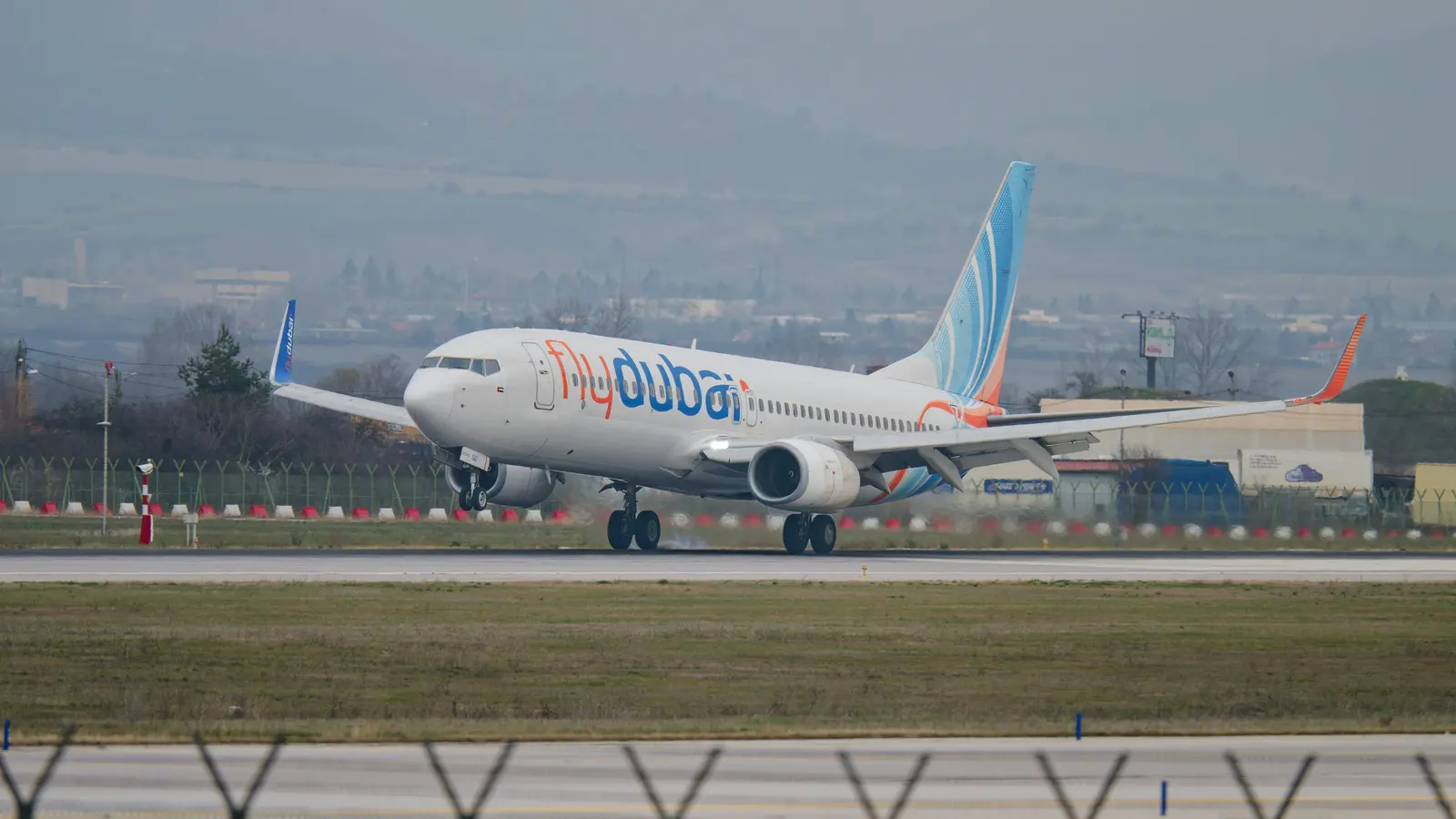
A flydubai flight from Dubai to Tel Aviv made an emergency landing at Tabuk, in north-western Saudi Arabia, on 30 September 2026 after an altercation on the flight deck. The jet was a Boeing 737 MAX 8. Flightradar24 identified it as A6-FKF. Everyone the airline has accounted for got down safely. What follows separates that record from passenger stories and Israeli government claims. None of those is a published investigation.
The service was FZ1073, from Dubai International Airport to Ben Gurion Airport. flydubai said the confrontation happened in the flight deck, and that company crew who were already on board as travellers secured the aircraft, turned it toward Tabuk, and landed there. The airline said passengers and crew were safe and accounted for. It sent two other aircraft to pick them up. It also said it did not know why the fight started, and it asked people not to guess at a motive.
In a later statement, flydubai said flights to and from Israel would stop while the investigation goes on. Passengers whose trips were disrupted would be helped where the airline could arrange another way to travel. An earlier note had said the rest of the network was unaffected.
Flightradar24, as reconstructed by Anadolu Agency, shows the aircraft leaving Dubai at about 03:05 GMT and levelling near 34,000 feet. Around 05:21 GMT the altitude trace becomes erratic: a fast descent, a climb, then another drop. The same tracking record shows a loss of more than 14,000 feet in less than 30 seconds. By about 05:33 GMT the aircraft was near 15,000 feet. A tracker can show height and track. It cannot show who was holding the controls. That answer depends on the flight recorders, cockpit audio, and air traffic recordings, which have not been released.
Several minutes after the first drop, the transponder sent 7700, the general emergency code, Anadolu reported from the tracking feed. It later sent 7500, the code used for unlawful interference, and then returned to 7700. flydubai has not described the flight as a hijacking. Tabuk air traffic control received a distress call at 8:44 a.m. local time, and the aircraft landed at about 9:45 a.m., the airport said. The captain and first officer were taken to hospital. Saudi airport authorities put the passenger count at 174. Those passengers left Tabuk at about 5:40 p.m. local time on a replacement flydubai aircraft.
Photographs taken after the landing appear to show damage to the rudder. flydubai told The National that the aircraft was damaged and that passengers were not seriously hurt. The airline also told that newspaper it would not discuss the pilots' nationalities until the recorders had been examined. No official account has explained the rudder damage, or whether speed, a control input, or something else caused it.
Saudi Arabia's National Transport Safety Center said it opened an investigation into the landing at Prince Sultan bin Abdulaziz International Airport and began collecting evidence. The UAE General Civil Aviation Authority called the event a security incident that crew brought under control, said some crew were injured, and asked the public not to spread unofficial versions before findings are issued. On 1 October the UAE Ministry of Foreign Affairs said Attorney-General Hamad Al Shamsi had assigned prosecutors to the case as well. The ministry said they will look at motive, including any terrorist link and any sign the act was planned or directed, and that UAE law applies because the aircraft is on the UAE register.
Israeli Prime Minister Benjamin Netanyahu has gone further than the airline. He said one pilot stabbed the other and appeared to try to crash the jet, that the injured pilot opened the cockpit door, and that people from the cabin then restrained the attacker. A spokesperson for him said the wounded captain was the person who released the door. Israeli officials have named that captain as Smit Machchhar, an Indian national. Gulf News reported that India's embassy in Saudi Arabia said he was in a stable condition. An Israeli official told Reuters the other pilot was Omani. flydubai has not confirmed either nationality, and Al Jazeera noted that the arrested pilot's nationality has not been independently verified. Netanyahu said Saudi authorities were holding a pilot from the flight. Saudi investigators have not published that person's name.
Passenger accounts collected by Israeli media say people heard shouting, that some of them entered the flight deck, and that a passenger, Yaniv Hayoun, held the flying controls before other flydubai pilots took over. Hayoun is a plumber, not a pilot, in those accounts. They are witness statements. They are not a reconstruction of the flight.
Until the recorders are read, the parts that organisations have actually stated are the flight-deck altercation, the diversion to Tabuk, injuries to both pilots, damage acknowledged by the airline, and the pause in flydubai's Israel flights. The claim that a pilot tried to crash the aircraft remains outside that record.